Tech Deck Tricks has the secrets to mastering any deck. From graphics, colors, and shapes, to how-tos and tutorials, Tech Deck Tricks will teach you how to trick out your deck in no time.
Friday, February 9, 2024
Xiaomi 14 Ultra Design Leaked Again Via Handson Image; Suggests Circular Rear Camera Module
Xiaomi 14 and Xiaomi 14 Pro were launched in China last October with the Snapdragon 8 Gen 3 SoC. Xiaomi will launch these flagship smartphones in markets outside China on February 25. The long-awaited Xiaomi 14 Ultra is also expected to debut at the global launch, but first we'll see the phone up close in a real photo. . The alleged live image highlights the design and placement of the rear camera of the Xiaomi 14 Ultra.
The alleged live image of the Xiaomi 14 Ultra was provided by tipster Digital Chat Station (translated from Chinese) via Weibo. The phone appears to be alongside several flagship phones from other brands. The image vaguely shows an off-white device with a circular camera module that resembles the design of last year's Xiaomi 13 Ultra.
Alleged live image of the Xiaomi 14 Ultra Photo: Digital Chat Station/Weibo
We first saw the Xiaomi 14 Ultra in early January thanks to a series of hands-on images. A previous leak highlighted a larger camera island and Leica branding.
The Xiaomi 14 Ultra is expected to feature a quad rear camera setup consisting of four 50-megapixel cameras. The camera can be equipped with the latest 1-inch Sony LYT900 sensor as the main camera with an aperture of f/1.63. It is expected to have a 6.7-inch AMOLED display with 2K resolution and 120Hz refresh rate.
The Xiaomi 14 Ultra, like the Xiaomi 14 and Xiaomi 14 Pro, is expected to use a Qualcomm Snapdragon 8 Gen 3 processor. It would have slightly curved displays and an ultrasonic fingerprint scanner for authentication. The phone is backed by a 5,180 mAh battery with 90W wired charging support and 50W wireless charging support.
Xiaomi recently announced the global launch date of the Xiaomi 14 series. The phones will be unveiled on February 25 in Barcelona, before MWC.
Xiaomi launched its flagship camera smartphone, the Xiaomi 13 Ultra, and Apple opened its first stores in India this week. We discuss these developments along with other smartphone rumors and more in the Orbital Gadgets 360 podcast. Orbital is available on Spotify, Gaana, JioSaavn, Google Podcasts, Apple Podcasts, Amazon Music, and wherever you get your podcasts.
Affiliate links may be generated automatically; Please see our ethics statement for more details.
OnePlus 8, 8 Pro, May 29, Realme Buds Neo Real images, Buds Q, Redmi 9, Realme TV leak, iQOO Z1 44W
Xiaomi Redmi Pad SE Tablet Review: Budget Champion
Android tablets are cheap: There's a good chance you've used one for under $300. There's some truth to this idea; Generally speaking, any Android tablet priced below this price will have a similar story. The build quality will be poor, the internal components will be outdated, the performance will be poor, and in a year or so it will probably turn into a flat paperweight. It is for this reason that my expectations were low when I was offered a review of the new Xiaomi Redmi Pad SE.
Fortunately, my ailments quickly disappeared when I picked up the tablet. This is the first Xiaomi device that I have used and it did not disappoint me, also it is a cheap device. From the metal body and superb build quality to the impressive performance, Xiaomi has a tablet that delivers more than its price tag.
Xiaomi Redmi Pad SE
Xiaomi has created an affordable widescreen Android tablet that fits comfortably in the hand and offers impressive performance for its price. With four speakers, a high-resolution display, expandable memory, and more, the Xiaomi Redmi Pad SE is a great Android tablet for everyday use.
Warehousing
128 GB expandable via microSD card
Procedure
Android 13, MIUI Pad 14
Drums
8000 mAh, fast charging 3.0 18W
Port
USB-C, 3.5mm
Display type
IPS LCD, 90 Hz, 400 nits
connection
Wi-Fi 802.11 a/b/g/n/ac, dual band, Bluetooth 5.0
Color
Mint green, graphite grey, lavender purple
Demonstrative steps
11 centimetres
Screen quality
1200 x 1920 pixels, 16:10 aspect ratio (~207 ppi density)
IP protection rating
N/A
Heavy
478 grams
SIM card support
NO
Social
Qualcomm SM6225 Snapdragon 680 4G (6nm)
RAM
4GB/6GB/8GB
Front camera
5 MP front camera, f/2.2, 1.12 micron pixel size
Rear camera
8 MP rear camera, f/2.0, 1.12 micron pixel size
Measurement
255.5 x 167.1 x 7.4 mm (10.06 x 6.58 x 0.29 in)
Supporter
Good build quality
Excellent performance for the price
90Hz high refresh rate display
Useful multifunctional function.
Counter
Not sure about software support
The speakers are normal.
There is no fingerprint scanner.
Price and availability
Easy on your wallet
Xiaomi Redmi Pad SE was announced in August 2023 and released a month later. Xiaomi sells the 128GB/8GB model on Amazon for $240. However, Amazon offers 4GB and 6GB options from third-party sellers. The aluminum body of this tablet is available in three colors: mint green, graphite gray and lavender purple.
Design and hardware
Better than necessary
I've used many cheap Android tablets over the years, and I've never been happier with the OG Nexus 7. Today I recently had the chance to use some of the best Android tablets you can buy. including OnePlus Pad and Samsung Galaxy Tab S8 Ultra. Each manages to amaze in its own way, but aims at different prices, with Samsung aiming for the top of the category and OnePlus in the middle. In this way the lower band remains open and Xiaomi is blocked.
Right from the start, the feeling of the Xiaomi Redmi Pad SE in the hand is simply amazing. The aluminum body is rigid, quiet, and features smooth bevels around the frame to eliminate sharp edges. It features an 11-inch FHD+ IPS LCD panel with a resolution of 1920 x 1200 and a brightness level of 400 nits. Interestingly, Xiaomi has decided to include a higher refresh rate of up to 90Hz, which improves the overall experience. I wish Xiaomi would place a fingerprint scanner under the screen or at least on the power button.
It's hard to imagine a $240 Android tablet feeling premium, but that's exactly what the Xiaomi Redmi Pad SE feels like.
The dimensions of this tablet are 10.06 x 6.58 x 0.29 inches and the weight of 478g gives the tablet enough weight to feel premium without being too heavy to hold in your hand most of the time. I know that for years the tech industry and many consumers have made a huge effort to eliminate bezels around device screens. While I like the full-screen view as much as the next person, I like having a ⅜-inch bezel around the screen as it provides a convenient place to store the tablet while I use it without interfering with the screen. it seems.
Inside, the Xiaomi Redmi Pad SE is powered by a Qualcomm Snapdragon 680 processor and Qualcomm Adreno GPU, 4/6/8 GB of RAM and 128 GB of internal storage. The device I reviewed had 8GB of RAM and 128GB of internal storage, expandable up to 1TB via microSD card, and it worked quite well.
The tablet features four speakers that support Dolby Atmos, as well as custom presets and equalizer settings. The sound is very loud and maintains volume clarity well. What I miss in the sound is a little more bass. The highs and mids sound good, but the low frequencies are lacking. I wouldn't classify this device as a budget tablet, but it's still worth mentioning, especially considering that consuming content on a tablet is quite cheap.
Software, performance and battery
Clean and tidy
While the Xiaomi Redmi Pad SE works very well, making it a contender for the best budget Android tablet you can find, it's not one of the best gaming tablets. The Qualcomm Snapdragon 680 chipset will handle most of the needs of an average tablet well. Browsing the Internet, checking email, watching YouTube videos and switching between apps is easy with the Xiaomi Redmi Pad SE. I can play some games on the tablet without any problems. I played one of the best racing games for Android, Asphalt 9 Legends, with a high level of graphics pre-installed, and I beat the competition.
The device runs Android 13 software based on Xiaomi's MIUI Pad 14 and comes with various useful features like running two apps at the same time and the tablet is hassle-free. The MIUI Pad 14 was completely unknown to me when I first used it and it didn't take me long to get used to it. The tablet's shell is crystal clear, and Xiaomi says it will support the software for two years with major OS updates and three years of maintenance.
The battery life on this tablet is amazing. The 8000 mAh battery guarantees excellent standby autonomy. When I looked at my device, the battery remained at 44%, meaning more than 189 hours had passed since the last charge. Of course, since the Xiaomi Redmi Pad SE combines standby mode and actual use, it can easily last several days on a single charge, depending on what you do. The downside is that it only supports 10W wired charging, so charging takes a while.
Camera
Nothing special
If you entered this segment expecting the Xiaomi Redmi Pad SE to be as good as other devices in the photography department, prepare to be disappointed. To be honest, cameras rarely look impressive on any tablet. With this device you get an 8-megapixel rear camera with f/2.0 aperture without OIS or other features. The front camera is nothing special: it has a resolution of 5 megapixels and an f/2.2 aperture.
Both of these lenses have a photography function and can handle slight movement without too much blur. But in good lighting, the image will be dark and grainy. Xiaomi uses some HDR and AI features to try to make the image pop, and while they help, they don't do much. Both cameras can record 1080p video at 30 fps, which is useful for short videos or video calls, but not much else.
competition
Lots of choice, but no real competition.
There are many cheap Android smartphones available in the market. However, as in most situations, you generally get what you pay for. For years, the market for cheap Android tablets has been flooded with unnecessary devices that produce more waste than they offer any real benefit to consumers. Fortunately, this has started to change in recent years, but few offer the same experience as the Xiaomi Redmi Pad SE. Out of the box this is Samsung's standard for a budget tablet. The latest device vying to dethrone Xiaomi is the Galaxy Tab A8.
Depending on what time of year you buy it, the Galaxy Tab A8 costs about the same as the $100 Redmi Pad SE. But its performance will suffer greatly from Samsung's offering since it's only available with 4GB of RAM and it is powered by a less powerful Unisock Tiger T618 processor. Instead of an IPS panel, this Xiaomi tablet has a screen that only supports a 60Hz refresh rate and uses a TFT LCD display.
If you're looking for a larger form factor that doesn't run iPadOS, you might want to consider the Amazon Fire HD 10. If you're okay with choosing FireOS over Amazon's Android version, it's a solid tablet worth considering. Note that you won't have access to the Google Play Store, at least not by default, but Amazon's App Store has plenty of options. The Amazon Fire HD 10, like the Redmi Pad SE, won't win any performance awards, but its price is quite good.
Is it worth buying?
If you're looking for an Android tablet at the critical price of $300, the Xiaomi Redmi Pad SE is definitely worth it. It's hard to believe that at this price you can find a tablet with an aluminum body, high refresh rate screen, Qualcomm Snapdragon processor, up to 8GB of RAM and expandable storage, all with at least two OS updates. While it all sounds great on paper, or rather on screen, it works just as well in practice.
I really enjoyed using this device and have no problem recommending it as a mid-range tablet for everyday use. The Xiaomi Redmi Pad SE had no issues running apps, streaming movies, or playing games simultaneously. Of course, there's still room for improvement: I wish there was some sort of fingerprint scanner and the speakers had a wider soundstage, but at $240, this tablet is a winner.
Xiaomi Redmi Pad SE
If you're looking for an affordable Android tablet that can compete with Apple's entry-level iPad, the Xiaomi Redmi Pad SE is a strong contender. Priced under $250, it's the perfect combination of performance and quality for a solid Android experience.
RedmiPad 5G | Redmi Tab | Xiaomi Pad | Best Tablets Under 20,000
Xiaomi 14 Ultra Key Camera Details Leaked; Likely To Retain Placement As Xiaomi 13 Ultra
The Xiaomi 14 and Xiaomi 14 Pro with the new HyperOS interface were launched in China in October 2023, and now several rumors suggest that the Xiaomi 14 Ultra could soon join the lineup. Recently, an alleged Xiaomi 14 Ultra glass cover surfaced online, revealing important details about the upcoming smartphone's camera. It may feature the same camera module design as its predecessor but has brighter lenses. The Chinese tech giant is rumored to launch the phone in March 2024.
A leaked image (via GSMArena) shows the glass covered with the Leica logo. The camera cutouts are the same as the Xiaomi 13 Ultra, but the size of the lens holes is slightly larger, suggesting a brighter lens could be in the works. According to reports, the main camera may have an aperture of f/1.6 compared to the f/1.9 aperture of its predecessor.
The periscope camera is said to have a lens with an f/2.5 aperture instead of the f/3.0 aperture of the Xiaomi 13 Ultra. Previously, a tipster claimed that the Xiaomi 14 Ultra could feature a Sony LYT-900 sensor for the main camera with variable aperture (f/1.63-f/2.5). An aspherical lens (ASPH) called Vario-Summilux 1:1.63-2.5/12-120 was also recommended. Furthermore, a 120mm periscope television camera is also mentioned in the leak.
Another report claims that the Xiaomi 14 Ultra may be powered by a Snapdragon 8 Gen 3 chipset. It may feature a 6.7-inch AMOLED display with a 2K resolution and a 120Hz refresh rate. It is rumored to have a 5180mAh battery with 90W wired charging support and 50 -W wireless charging support. The phone may have a slightly curved display.
According to the report, the Xiaomi 14 series is expected to launch in India at the Mobile World Congress (MWC 2024) along with other global markets. This year's annual event will take place February 26-29. However, the company did not comment on the presentation.
Xiaomi's flagship Model 14 was launched in China in October 2023 and features a 6.3-inch LTPO AMOLED display with an adaptive refresh rate of 1Hz - 120Hz and a maximum brightness of up to 3000 nits. It is powered by a Qualcomm Snapdragon 8 Gen 3 chip and has up to 12GB of RAM and up to 1TB of internal storage.
Optically, the Xiaomi 14 is equipped with a 50-megapixel triple rear camera and a 32-megapixel front selfie camera. The smartphone packs a 4610mAh battery that supports 90W wired charging, 50W wireless charging and 10W reverse wireless charging.
Affiliate links can be generated automatically; Please see our ethics statement for further details.
“Remove this little chip before using your phone!” Edward Snowden
Xiaomi Smart Band 8 Pro Global Edition: Release Date And Price Predictions
We already know everything there is to know about the Xiaomi Smart Band 8 Pro, but that doesn't mean we can get the global version just yet.
Repeating the release cycle we often see with Chinese fitness trackers, Xiaomi's premium lineup launched in the company's home country last summer.
But we are still waiting for its launch in the UK, Europe and beyond.
Below we'll provide information on the latest release date and price rumors, as well as list all the major improvements we've noticed with the debut of the Smart Band 8 Pro.
When will the global version be released?
easy to remember
As we said, Xiaomi Smart Band 8 Pro was announced in August 2023 for China, but we still have no official word from the company regarding its global release.
This long wait is in fact not in line with the previous generation, Smart Band Pro 7, which released its global version in October 2022 (only a few months after being released in China).
However, a recent leak suggests that the eighth generation Pro tracker model may already be available.
According to the certification files published on the Malaysian device certification database SIRIM-QAS shown above, the Smart Band 8 Pro has been approved for release on November 23.
Presentations like this are usually a strong sign that an official announcement is imminent.
We doubt we'll hear anything in the first quarter of 2024 (January 1 - March 31), although Xiaomi has a habit of releasing its devices globally in April, as we saw with the wide launch of the Mi Band 6.
How much does the global version cost?
xiaomi
In China, the Smart Band 8 Pro costs 399 yuan, which works out to around $55 / £45 / €50.
However, on these Global Edition devices, we generally see little gain.
For example, the Smart Band 7 Pro is currently available in the UK for around £75. We already know that the entry-level Smart Band 8 Global Edition is available for £40.
Taking all this into account, we estimate the Smart Band 8 Pro Global Edition will cost around £75-80 or $95-100 / €90-95 if you go with Transfer.
Official specifications and new features
xiaomi
The Band 8 Pro features the same hybrid fitness tracker and smartwatch design that has become increasingly popular in recent years.
At first glance it looks very similar to the Band 7 Pro, the series of sensors (GPS, heart rate, SpO2) also lags behind the previous generation and there is no music storage support.
This isn't surprising considering Xiaomi's consistent history of offering minimal updates between generations, but there are some new features that are important to keep in mind. Let's explore it.
Bigger and better shows
Xiaomi increased the screen size with the Band 8 Pro to 1.73 inches (from 1.63 inches for the Band 7 Pro).
While this is a positive change, it is not necessarily an improvement in appearance per se. The overall dimensions of the Band 8 Pro have also increased, to 46 x 33.35 x 9.99mm. For comparison, the Band 7 Pro measures 44.7 x 28.8 x 11mm.
So, thanks to the slightly larger body, we have a larger screen - and the device is also slightly thinner than the previous model.
According to Xiaomi's spec sheet, the resolution has also increased due to the larger screen size. The Band 8 Pro can output 336 x 448 pixels, a change from the 280 x 456 pixels we saw on the Band 7 Pro.
Improved operating system and widgets
Announcing the Band 8 Pro, Xiaomi teased an improved user interface and new hardware. Since we don't have the device, it's hard to know the extent of this improvement, but it should make the tracker a little easier to navigate.
With no physical buttons in the design, this is a welcome change.
According to Xiaomi, there should be a new set of faces to choose from, as well as tools for tracking daily activity, contactless payments (China only), and more.
Increase battery life
The Band 8 Pro has a larger battery than the previous generation, perhaps because the body is slightly larger. While the Band 7 Pro has a 235 mAh unit, Xiaomi installed a 285 mAh battery for the latest generation.
Of course, this means longer battery life. Xiaomi estimates the device will last 14 days under "normal use", compared to 12 days for the Band 7 Pro.
We found those ratings to be pretty accurate when we tested the Band 7 Pro, even though it involved disabling many features. In fact, we think most people will find this tracker to last between 4 and 7 days and we expect it to be a little better than the Band 8 Pro.
POCO X5 Pro 5G is a test of endurance and bending!
Xiaomi's HyperOS Global Rollout Kicks Off 'gradually' Through Q1 2024 — Here Are The Devices Getting It
Xiaomi has announced the launch of HyperOS in Q1 2024 for select devices including 13, 13 Pro and tablets.
POCO also says it will bring HyperOS to the POCO F5, with other devices arriving "later."
HyperOS will "gradually" eliminate MIUI from Xiaomi devices with new "human-centric" software that integrates the ecosystem with new features.
Xiaomi has announced the launch of the new Android HyperOS operating system on many of its devices.
According to a post on
Furthermore, POCO has announced that it will bring Xiaomi's HyperOS to the POCO F5. The company says the 2023 release will be the first to bring changes to additional hardware that will arrive "later."
Xiaomi said that owners of the aforementioned devices will receive the OTA update “gradually”, so the release will not be quick. The software replaces the brand's MIUI for the new HyperOS, which Xiaomi called "human-centric" when the 14 and 14 Pro were launched.
Xiaomi founder and CEO Lei Jun announced the change on Weibo in October (via 9to5Google). The company turned to software designed for "people, cars and home ecosystems." However, since HyperOS is integrated into Android systems, the announcement of Xiaomi's new software has not yet been announced. It also promotes a "self-updating Vela system" and a "complete rewrite of the original architecture".
The Chinese OEM expands what users can expect from HyperOS, where devices will increase computing power and reduce delays in transmission and message passing. Additionally, HyperOS is said to be lighter on the user's device memory due to internal changes.
HyperOS offers new lock screen customization options for wallpapers and “Flippy Frame” to create a more immersive experience on large tablet displays. Along with the advanced deployment software, Xiaomi plans to offer more vibrant colors with the updated operating system interface.
Always-on HyperOS is finally here! Android 14 on Xiaomi: is it a turning point?
Xiaomi Fires Employees Who Leaked False Xiaomi Car Information
Xiaomi's first car will arrive soon, and as with any product launched in the near future, leaks are inevitable.
However, the Chinese tech giant recently got fed up with all the flaws in the automotive industry, targeted its first car and decided to take action against those responsible.
First, the company said it fired three employees who spread false information about Xiaomi's upcoming car. According to Xiaomi, the three employees, who are part of teams working on electrical systems, software components, stamping, stamping and quality teams, participated in unauthorized meetings and shared incorrect information about the vehicle.
The three employees received what Xiaomi called "consulting fees," even though all the information the company provided to brokerage firms and investment groups was incorrect.
Second, Xiaomi will take legal action against two Chinese media outlets that published a video showing a Xiaomi car despite signing a non-disclosure agreement.
The latest information in the rumors indicates that Xiaomi may introduce a Xiaomi car in the last week of this year, although the company does not know the date. But several people familiar with the matter said the car will enter mass production in the first half of 2024, with the company expecting to produce 100,000 cars in the first year. Production will double in 2025 when Xiaomi introduces the second model.
China's Ministry of Information Technology previously revealed basic information about Xiaomi's first car, including images of the Porsche Taycan and Tesla Model S, called the SU7. Xiaomi's first car can arrive as a sedan with a range of about 800 kilometers on a single charge. although the company... is also testing a performance-oriented version with different specs.
Xiaomi is the first tech giant to launch a car made from scratch. Apple is the next big name to follow in its footsteps, although it takes longer to complete vehicle development than Xiaomi. The latest information from unofficial channels suggests that Apple's vehicle could arrive as early as 2026, although the iPhone maker is said to be leaning towards delaying the launch by a decade due to development issues.
Apple is reportedly abandoning some of its more ambitious systems and taking a more traditional approach to its first cars. The car was originally intended to be a self-driving model with a bedroom-like cabin, dual wheels and a productive workspace. However, Apple's latest plans include a more traditional cockpit with a steering wheel, pedals and everything you'd find in a car, as the company believes a more revolutionary approach isn't possible in this decade.
Apple does not comment on Apple Cars, so all information comes through an unverified channel.
Apple Faces Stiff Competition From Huawei And Xiaomi In China's Singles Day Smartphone Sales
Apple reported a decline in smartphone sales in China on Singles Day. Data from Counterpoint Research showed a 4% decline in units sold a year ago. In contrast, domestic rivals Huawei and Xiaomi posted increases of 66 and 28 percent, respectively, over the same period. These figures show a sharp increase in the number of Chinese smartphones sold, with growth of 5 percent year-on-year in the two sales weeks from October 30 to November 12.
The Singles Day sales event in China showed an interesting trend: iPhone sales fell while Huawei smartphone sales rose sharply. While Apple's new iPhone 15 model starts at 5,999 yuan ($832), Huawei's Mate 60 smartphones start at 5,499 yuan ($763) and Xiaomi's latest Mi 14 smartphone starts at 3,999 yuan ($555). It has gained popularity. on the market.
Retailer JD.com reported that sales of Apple products on Singles Day exceeded $1.39 billion, showing the event's significant impact on Apple's sales in China. However, Chinese e-commerce platforms such as Alibaba and JD.com did not disclose detailed sales figures for the event, making it difficult to directly compare this year's performance with previous years. .
The strong sales growth of Huawei and Xiaomi shows that competition from Apple is growing in China's smartphone market. In particular, the total value of Xiaomi's goods accumulated during the fair is more than 22.4 billion yuan, highlighting its market presence and success during the event.
Interestingly, despite a 4% decline in Apple's iPhone, Huawei's sales increased by more than 90%, representing a significant recovery for the company, especially with the launch of the Mate 60 Pro, with which Xiaomi strengthens its presence in the premium market segment . Oppose the strength of Apple. This strategic pivot has resulted in a 46% increase in Xiaomi's stock market value by 2023, reflecting the company's strong performance in the smartphone market.
Competition in China's smartphone market underscores Apple's challenge amid news that China is expanding its iPhone ban in key sectors. Combined with recent sales growth, this growth highlights Apple's competitive advantage in China.
The Xiaomi 14 And Xiaomi 14 Pro Are The First Flagships With Snapdragon 8 Gen 3
TL; D.R.
Xiaomi has announced the Xiaomi 14 and Xiaomi 14 Pro, the first smartphones with the new Qualcomm Snapdragon 8 Gen 3 SoC.
They also introduced the new Leica Sumilux lenses and are the first devices to launch Xiaomi's new HyperOS UX.
As someone who has been using the Xiaomi 13 Pro for several months, I can safely call it one of the best Android flagships out there. Xiaomi has focused on creating amazing and well-rounded flagships, and the 13 Pro is very close to being a great camera flagship. Xiaomi is back with the latest Xiaomi 14 series and is ready to take things further.
The Xiaomi 14 series includes Xiaomi 14 and Xiaomi 14 Pro. Both the smartphones are powered by the recently announced Qualcomm Snapdragon 8 Gen 3 processor, making them the first phones with the new Flash SoC. There is up to 16 GB of LPDDR5X RAM and up to 1 TB of internal UFS 4.0 memory on board.
Xiaomi 14
Both devices feature a 120Hz AMOLED display with a maximum brightness of 3,000 nits. The Xiaomi 14 has a 6.36-inch display with 1.5K resolution, while the Pro model has a larger 6.73-inch screen with 2K resolution. The Pro's screen doesn't have the curved side edges of the previous model, but now has a 2.5D curve on all four sides, giving it a curved look. Both phones have very thin bezels on the front. The design of the flags has also changed a little: the central frame has become more flat.
Xiaomi 14 Pro
The main camera on the Xiaomi 14 is a new 50MP 1/1.31-inch Light Fusion 900 sensor with f/1.6 aperture and OIS, with a 50MP JN1 ultra-wide-angle sensor with f/2.2 aperture and angle view 115°. Vision. JN1 50MP telephoto lens with 3.2x optical zoom, f/2.0 aperture and optical image stabilization. A major focus this year was the Leica Sumilux lens, which offers greater aperture.
The Xiaomi 14 Pro uses the same Light Fusion 900 sensor, but with an aperture of f/1.42–f/4. It's not just a double hole, it's a flexible hole with multiple stops between the two ends. The ultra-wide-angle lens is the same, but with autofocus capability down to 5cm for super macro photography.
The front camera on both devices is a 32-megapixel sensor and can now record 4K video at 60fps.
The Xiaomi 14 has a 4610mAh battery with 90W fast charging, while the Xiaomi 14 Pro has a 4880mAh battery with 120W fast charging. Both support 50W wireless charging. Both are also IP68 rated for dust and water resistance. Xiaomi 14 offers USB-C USB 3.2 Gen 1 port for 5Gbps data transfer, Pro USB 3.2 Gen 2 for 10Gbps.
The Xiaomi 14 and 14 Pro are the first phones to launch with the new Xiaomi HyperOS UX.
Xiaomi 14 and Xiaomi 14 Pro: prices and availability
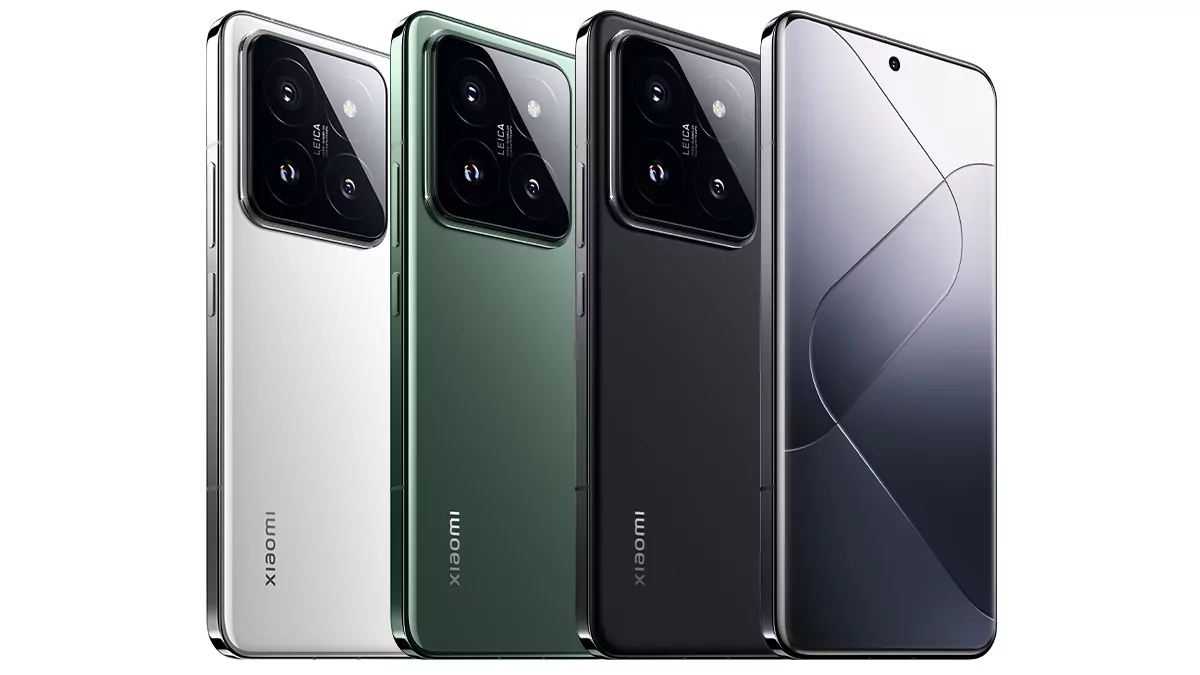
The Xiaomi 14 series comes in jade green, white and black colors. The regular Xiaomi 14 also comes in Snow Mountain Pink color.
Prices in China are as follows
Xiaomi 14:
8GB + 256GB: 3999 Yuan (~$546)
12GB + 256GB: 4299 Yuan (~$587)
16GB + 512GB: 4599 Yuan (~$628)
16 GB + 1 TB: 4999 Yuan (~$683)
Xiaomi 14 Pro:
12GB + 256GB: 4999 Yuan (~$683)
16GB + 512GB: 5499 Yuan (~$751)
16 GB + 1 TB: 5999 RMB (~$820)
Xiaomi is yet to announce global pricing and availability. However, given past trends, we can expect these devices to be available globally in the coming months, hopefully at competitive prices.
Xiaomi 14 Pro - Titanium version
Xiaomi 14 Pro is available in China in a special Titanium version. It is priced at RMB 6,499 (~$888) for a single 16GB + 1TB variant.
What do you think about the Xiaomi 14 series? Let us know in the comments below!
Xiaomi 14 Pro Titanium Edition - Another New 2023 Phone #NewPhones2023
Xiaomi 14 Can Trick The Snapdragon 8 Gen 3 To Run Your Favorite Old Android Apps
Xiaomi 14 Pro – Titanium Edition
TL; Doctor
The Xiaomi 14 series comes with a Snapdragon 8 Gen 3 SoC, which drops support for 32-bit apps.
However, Xiaomi has added a translation layer to the phone that maintains 32-bit app compatibility.
This means that users can continue to use their old apps without any problems.
The Xiaomi 14 and Xiaomi 14 Pro are the first to come with the new Qualcomm Snapdragon 8 Gen 3 SoC. This makes this device one of the best Android phones to launch internationally in the coming weeks. However, with the new SoC, some changes may break your old apps. But Xiaomi seems to have a trick up its sleeve, allowing its phones to run your old apps without any issues.
Snapdragon 8 Gen 3 is Qualcomm's first 64-bit SoC. This SoC does not have a processor core that supports older 32-bit ARM applications. Therefore, legacy apps that have not been updated to run on 64-bit cores will not run on phones with this SoC.
However, as developer realMlgmXyysd explains in a post on the Telegram channel, Xiaomi is using a clever trick to make its new phones run old apps. Xiaomi integrates a 32-bit and 64-bit binary translator called "Tango", which improves compatibility with existing applications.
As Mishal Rahman points out, this compatibility layer allows 32-bit apps like Flappy Bird to continue to work on the new Xiaomi 14 series, even if the SoC doesn't officially support it.
Flappy flapper bird!
The Qualcomm Snapdragon 8 Gen 3 does not have a processor core that supports AArch32 (32-bit ARM applications).
However, the Xiaomi 14 series can run 32-bit ARM apps like Flappy Bird, as @realMlgmXyysd shows below.
How is it possible?
Mishal previously predicted that smartphone makers will likely start using compatible layers. Google has long since only accepted 32-bit apps on the Google Play Store. All 32-bit apps must have a 64-bit version if they are to be uploaded to the Play Store. This requirement has been in place for several years, so most users will not feel the impact.
The only area that will affect users is older apps that haven't been updated in a long time. This forgotten app is still available in 32-bit version, so it won't work on newer phones. The application may be closed by the developer or its functionality may be complete and not require real updates. However, these OEM solutions allow end users to continue using their favorite applications without worry.
Xiaomi HyperOS Images Leak: MIUI 15 With A New Name?
Turkish lira. Physician
A development version of HyperOS has appeared, allowing users to download applications on Xiaomi phones and preview the upcoming changes.
Although some apps have received a new look, the overall UX look and feel in this first development version is comparable to MIUI.
Despite the changes made by Xiaomi, this development version may be called MIUI 15.
Xiaomi recently announced that it would abandon MIUI UX in favor of the new HyperOS. HyperOS will appear in the upcoming Xiaomi 14 series and the skin will gradually replace MIUI worldwide. We now have new leaked images that give us an idea of what HyperOS might look like, and surprisingly, it still looks a lot like MIUI.
A Telegram channel called “Xiaomi HyperOS” (but not affiliated with Xiaomi) has shared APK files of various system apps from the recently leaked HyperOS build 23.9.28. Xiaomi uses YY.M.DD format for its daily development, so we can understand that the ROM was created on September 28, 2023. These APKs can be downloaded on devices running Android 13 and MIUI 14 to preview HyperOS. It will look like the end users.
We do not recommend installing APK files from unknown sources. Please be careful and discreet.
First we have screenshots of the quick settings called MIUI/HyperOS Control Center.
The security application has also been updated with a new user interface.
Other apps like File Manager, Weather, News, Gallery, Calendar and Clock have also received a new look.
The biggest changes can be found in the Wallpapers and Personalization section of the Settings app, where the Lock Screen submenu is located. In HyperOS we are likely to see several preset lock screen styles. If you don't like all this, you can customize the lock screen to your liking like on Android 14.
The calculator app also has an updated interface.
We also see new loading animations thanks to screenshots shared by users on Weibo. In HyperOS, the status bar shows changes in battery status and volume.
There are also new display modes that are always visible in the new AOD System app. YouTuber Technobuzz shared the transition animation between AOD and lock screen.
Get an overview of Always-on Display (AOD) and Lock Screen in HyperOS. 🤩
Our first look at HyperOS is a supposed screenshot of the About section of the leaked device.
These screenshots are from an early version of HyperOS, so the stable version of HyperOS may have additional changes. But from what we can see so far, HyperOS is pretty much what MIUI 15 could be, although Xiaomi may have changed under the hood.
MIUI developer Kacper Skrzype has a similar review. HyperOS is still MIUI as the APK files refer to MIUI 15 and not HyperOS, although Xiaomi has removed references to “MIUI” and replaced it with “System” or “OS”.
HyperOS is rumored to launch on October 27, coinciding with the launch of the Xiaomi 14 series. We look forward to learning more about Xiaomi's upcoming operating system.
Xiaomi MIUI 15: first look | 7+ new features | The new Android 14 update is here 🔥🔥🔥
The Smart Band 8 is a great choice for those looking for an ambitious and affordable tracker that offers a sleek design that enhances looks and functionality. It's by no means perfect, as a lot of fitness tracking data misses the mark and areas like health and intelligence are a bit fuzzy, but it's still hard to argue the value for money here.
"Pebble Mode" is a great addition
Group design has been improved a lot.
Battery life is still excellent
The lack of GPS is a real drawback
Accuracy is poor in some areas.
Features missing in global version
It may have changed its name from "Mi Band" to "Smart Band" since its launch, but Xiaomi's budget line of fitness trackers shows no signs of slowing down after nearly a decade at the top.
And while the bones are somewhat intact from the previous generation, this latest model, the Xiaomi Smart Band 8, has an updated design and clever, nifty running tracking system that immediately grabs your attention.
Even with these two big changes, the Smart Band 8 looks to be one of the biggest updates in recent years, regardless of the cheaper price, slightly larger battery and improved display.
However, as is always the case with such affordable fitness trackers, the experience is rarely polished and useful.
So we went live with Xiaomi's latest tracker to find out exactly how it performs.
Price and competition
don't forget
Not only does the Smart Band 8 face an ever-evolving field of trackers, including devices like the Fitbit Charge 6 and Huawei Band 8, but it also faces much stronger internal competition than previous versions, thanks to the release of the Pro Smart Band. 8.
That all-important price is more reasonable at least this time.
We've criticized the price hike for Xiaomi's Smart Band 7, but with the global version priced at £49.99, things are more or less back on budget.
So it's not as cheap as the Huawei Band 8, but it's still a fraction of Fitbit's Charge 6, which costs $159.95/£139.99.
Design and screen
don't forget
Most of the changes that Xiaomi has made to the Smart Band 8 are related to the exterior design, and this is the most important factor in giving the tracker a fresh feel.
Gone is the old unibody design of the old Mi Band/Smart Band and in its place there are now more simple slot connections on both ends.
This relatively large change was achieved without major changes in tracker size. The Smart Band 8 is a little taller and wider, but it's also a little thinner than its predecessor.
Thanks to some Xiaomi accessories, such as the pendant (shown below) and the running clip (more on that later), this pill-shaped tracker has become even more versatile.
don't forget
And with the ability to see through the shiny metal frame, the look is now much improved over the previous generation.
His condition did not improve. The screen, although its 1.64-inch size and the same resolution of 192 x 490 pixels as its predecessor, can now reach up to 600 nits of brightness.
It's a welcome boost that improves visibility in bright conditions, but the real big change to the screen is the refresh rate upgrade from 30Hz to 60Hz.
This means that scrolling through menus and viewing graphs and statistics is smoother and more in line with what you'd expect to see on a more expensive smartwatch.
Features, Operating System and Ecosystem
don't forget
Xiaomi's Mi Band/Smart Band trackers are generally quite limited in terms of smart experience, and not much has changed since the latest version.
However, this is not necessarily bad. After all, you can't get everything at this price, and there are a few smart features that work just fine.
Notifications might be a bit cramped on that 1.64-inch screen and you still can't do anything but see them, but at least they're customizable and delivered in a reliable way via the Mi Fitness app.
The same goes for widgets, which can be extensively edited in the companion app on Android or iOS. This makes navigating the tracker and quickly finding information (for example, or music playback controls) much easier than navigating text-heavy menus.
Xiaomi's operating system is also very smooth, a feeling helped by the increased refresh rate we were talking about earlier.
While this adds some refinement to the operating system, we must reiterate that there are still plenty of smart features to be excited about.
It doesn't support contactless payments, a smart assistant, and big-name third-party apps, so you'll need to upgrade to a more expensive smartwatch (or tracker) if those features are a priority.
Fitness and sports tracking.
don't forget
Considering the budget price of the Smart Band 8, Xiaomi is very ambitious when it comes to fitness tracking. Unfortunately, in most cases, they do not provide reliable information about your business.
The omission of GPS is still a bit disappointing and means you'll need to carry your phone if you want to get reliable distance data. Even then, we found it pretty bad: distances are often not reported and location paths in the app are virtually non-existent.
In terms of the pure accuracy of the tracked data, the picture is pretty clear: sometimes the data is in a high enough range to be reliable, but it's often far from our established baseline or what other devices record. device.
Compared to our other test devices, the Garmin Epix Pro (Gen 2) and Oura Gen 3, steps are sometimes significantly underestimated, while calorie burn estimates are largely unpredictable.
Xiaomi also continues to mimic a lot of the advanced data you'll find on Apple and Garmin devices, such as training load, recovery time and VO2 max, but none of it is really useful.
For example, we ran 30 miles per week with the Smart Band 8, along with two gym sessions and five hours of walking, but our training load was still considered "low."
don't forget
Meanwhile, during a one-hour workout, the Smart Band 8 will recommend 63 hours of rest for recovery and classify your workout as primarily anaerobic despite an average heart rate of 153.
Sometimes this type of error occurs when no personal data is entered (weight, age or height) and therefore indirectly affects the HR area, but this is not the case.
Other times, the accuracy of such measurements improves after a few weeks of use, but nothing in the app indicates that this is the case.
Fortunately, there are other useful concepts that usually arise when attaching the device to running shoes.
Pebble mode
don't forget
With a simple swipe of the app (and using a separately sold accessory), you can transform the Smart Band 8 from a wrist companion into a true operating room.
The results were surprisingly very good. The big downside is that you still have to set up a workout from your phone and carry it with you when you run, but the data seems to have some value.
Once your workout is complete, the Mi Fitness app's analysis will include graphs of your stride pattern, as well as ground contact time, flight time, flight percentage and impact force.
Cadence and stride length are also present, but these data are available (albeit less precise, in our tests) even when monitored from the wrist.
don't forget
As our example above shows, all the data seems to fall within a comfortable range of the wrist-based running dynamics information available on the Garmin Apex Pro (Gen 2), which is nice considering the impressive price difference.
Battery consumption is also very low when using this mode, although we have to say that we did have one incident where the Mi Fitness app consumed 45% of our phone's battery in 15 minutes while tracking through gravel mode, so it's not completely foolproof. To see it.
Heart rate monitoring
don't forget
Naturally, if you have the Smart Band 8 in Pebble mode, you won't be able to monitor your heart rate during a workout, but you'll be able to see this data if you have it on your wrist as normal.
As we discovered in a recent issue, the data is precise enough to handle.
In our tests, we found that the heart rate reading didn't respond well to real-time fluctuations, even when the pace was relatively stable.
Overall, the Smart Band 8 will report slightly higher average BPM values than those tracked on the Garmin and Hoop, though the maximum readings are pretty reliable.
As mentioned above, all three devices recorded a peak reading of around 170 bpm during a test, while the average reading was 4 bpm higher than the Garmin device and 8 bpm higher than the Whoop device, both significantly higher according to our efforts.
The good thing about the Smart Band 8 is that we didn't find any obviously incorrect data, as the heart rate reading either didn't increase or increase too much, as sometimes happens with cheaper devices.
So for those who want to get a basic overview of their efforts during training, we think it can still be useful.
Health monitoring
don't forget
The Smart Band 8 is definitely not a powerful health monitoring tool. However, like its smart features, you can sometimes access useful inclusions
The main hurdle to overcome here is that Xiaomi disables features like Blood Oxygen by default, which means you may end up, like we did, spending days wondering when your data will show up.
Once you dive into the Mi Fitness app's settings and turn it back on, at the expense of battery life, it's at least generally reliable.
The SpO2 readings didn't fall below what we expected from our blood oxygen data on other devices (between 95 and 99%), and our resting heart rate data was similar.
don't forget
However, it should be noted that resting heart rate data is always collected slightly differently between manufacturers.
Some, like Garmin and Oura, record your lowest heart rate while you sleep, while others, like Xiaomi and Apple, look for the lowest reading while you're awake and inactive.
Interestingly, the Mi Fitness app will always report your lowest heart rate for a given 24-hour period, as mentioned above, and is always very compatible with Oura and Garmin.
The Smart Band 8 can also receive notifications about high and low heart rates, though that's another feature you'll need to enable manually.
That's not a bad range considering the tracker's price, but we suspect Xiaomi will expand things to include respiratory rate and temperature monitoring in future releases.
For now, you'll have to look elsewhere for more advanced health data.
Sleep monitoring
don't forget
Like some health features, the Smart Band 8's more advanced sleep tracking is turned off by default, meaning you'll only get basic data initially.
It divides night sleep into light sleep or deep sleep, although it also includes REM sleep and heart rate monitoring (which produces more precise information about sleep stages) after enabling the setting.
Despite these drawbacks, the Smart Band 8 is a good sleep tracker.
It was able to continuously record when we fell asleep and when we got out of bed (shown below), and sleep stages, once advanced monitoring was enabled, could be more or less consistent with baseline monitoring.
But what's confusing is that it almost never records the "wake up" time, which throws things off.
don't forget
উপরন্তু, স্মার্ট ব্যান্ড 8 এবং এলিট স্লিপ ট্র্যাকারের মধ্যে একমাত্র অন্য পার্থক্য হল ঘুম-সম্পর্কিত তথ্যের স্তর, যেমন রাতারাতি রক্তের অক্সিজেনের গড় এবং হার্ট রেট পরিবর্তনশীলতা।
অন্তত শ্বাসযন্ত্রের হারের তথ্য পাওয়া যায়; আবার, আপনাকে এটিকে সঙ্গী অ্যাপের সেটিংসে খুঁজে পেতে এবং সক্ষম করতে হবে, যদিও এটি এখনও বিটাতে রয়েছে৷ আমরা যখন এটি চালু করি, তখন আমাদের ঘুমের রিপোর্টে কিছুই দেখা যায়নি।
সামগ্রিকভাবে, স্মার্ট ব্যান্ড 8 এর অভিজ্ঞতার মতোই, ঘুমের ট্র্যাকিংটি দুর্দান্ত থেকে কঠিন।
ব্যাটারি জীবন
ভুলে যেও না
স্মার্ট ব্যান্ড 8 এর ব্যাটারির ক্ষমতা তার পূর্বসূরীর মতো একই লাফ দেয় না, তবে এটি এখনও বেশি এবং আপনি আশা করতে পারেন নতুন ডিভাইসটি খুব টেকসই হবে।
এর আসল অবস্থায়, বেশিরভাগ পাওয়ার-হাংরি বৈশিষ্ট্যগুলি অক্ষম করা আছে, উপরে উল্লিখিত হিসাবে, ব্যাটারি খরচ ন্যূনতম। আমরা সাধারণত প্রতিদিন 5% এবং 7% এর মধ্যে ক্ষতি দেখেছি, যা Xiaomi-এর 16 দিনের অনুমানের প্রায় সমতুল্য।
যাইহোক, যে কেউ স্মার্ট ব্যান্ড 8 থেকে সবচেয়ে বেশি সুবিধা পেতে চায় তারা অন্তত এই বৈশিষ্ট্যগুলির মধ্যে কিছু সক্ষম করতে চাইবে, এবং এটি অবশ্যই যেখানে জিনিসগুলি নিচের দিকে যেতে শুরু করে।
সর্বদা-অন ডিসপ্লে সক্রিয় থাকা, আরও উন্নত ঘুমের ট্র্যাকিং এবং রক্তের অক্সিজেন ডেটা সহ, ব্যাটারি খরচ প্রতিদিন প্রায় 20% বৃদ্ধি পায়। এটি Xiaomi এর অনুমান থেকে খুব বেশি দূরে নয় এবং সাধারণত এই জাতীয় ডিভাইসের জন্য খুব ভাল।
যারা পেবল মোডে ডিভাইস ব্যবহার করার কথা বিবেচনা করছেন তাদের জন্য, আমাদের এটাও মনে রাখা উচিত যে আমাদের পরীক্ষায় দেখা গেছে যে আপনি প্লেব্যাকের প্রতি ঘন্টায় প্রায় 5% ব্যাটারি হারাবেন।
এবং যদি আপনার ব্যাটারি কম থাকে এবং আপনি সারাদিন পাওয়ার জন্য শক্তি খুঁজছেন, চার্জ করার গতিও দ্রুত। আমাদের পর্যালোচনা ইউনিট প্রায় 45 মিনিটের মধ্যে 10% থেকে সম্পূর্ণ চার্জে যেতে সক্ষম হয়েছিল।
আপনি এটা কিনতে হবে?
যদিও আমরা আগের স্মার্ট ব্যান্ড ডিভাইসগুলিকে তাদের পূর্বসূরীদের থেকে সামান্য পরিবর্তন দেখেছি, স্মার্ট ব্যান্ড 8 উত্তেজিত হওয়ার আসল কারণগুলি সরবরাহ করে।
বিশেষ করে যদি আপনি পূর্বে উন্নত ডিজাইনের অভাবের কারণে বন্ধ হয়ে যান বা আপনি আরও উন্নত তথ্যের সন্ধানে একজন রানার হন, তাহলে স্মার্ট ব্যান্ড 8 আগের প্রজন্মের তুলনায় আপগ্রেড করার যোগ্য।
এই মূল্যের পয়েন্টে সবসময় আপস থাকবে, কিন্তু এখানে মূল অভিজ্ঞতা, এই শিরোনাম পরিবর্তনগুলির সাথে মিলিত, এখনও আপনার অর্থের জন্য আপনাকে অনেক মূল্য দেয়। যাদের বাজেট-বান্ধব ফিটনেস ট্র্যাকার প্রয়োজন তাদের জন্য এটি সেরা বিকল্পগুলির মধ্যে একটি।